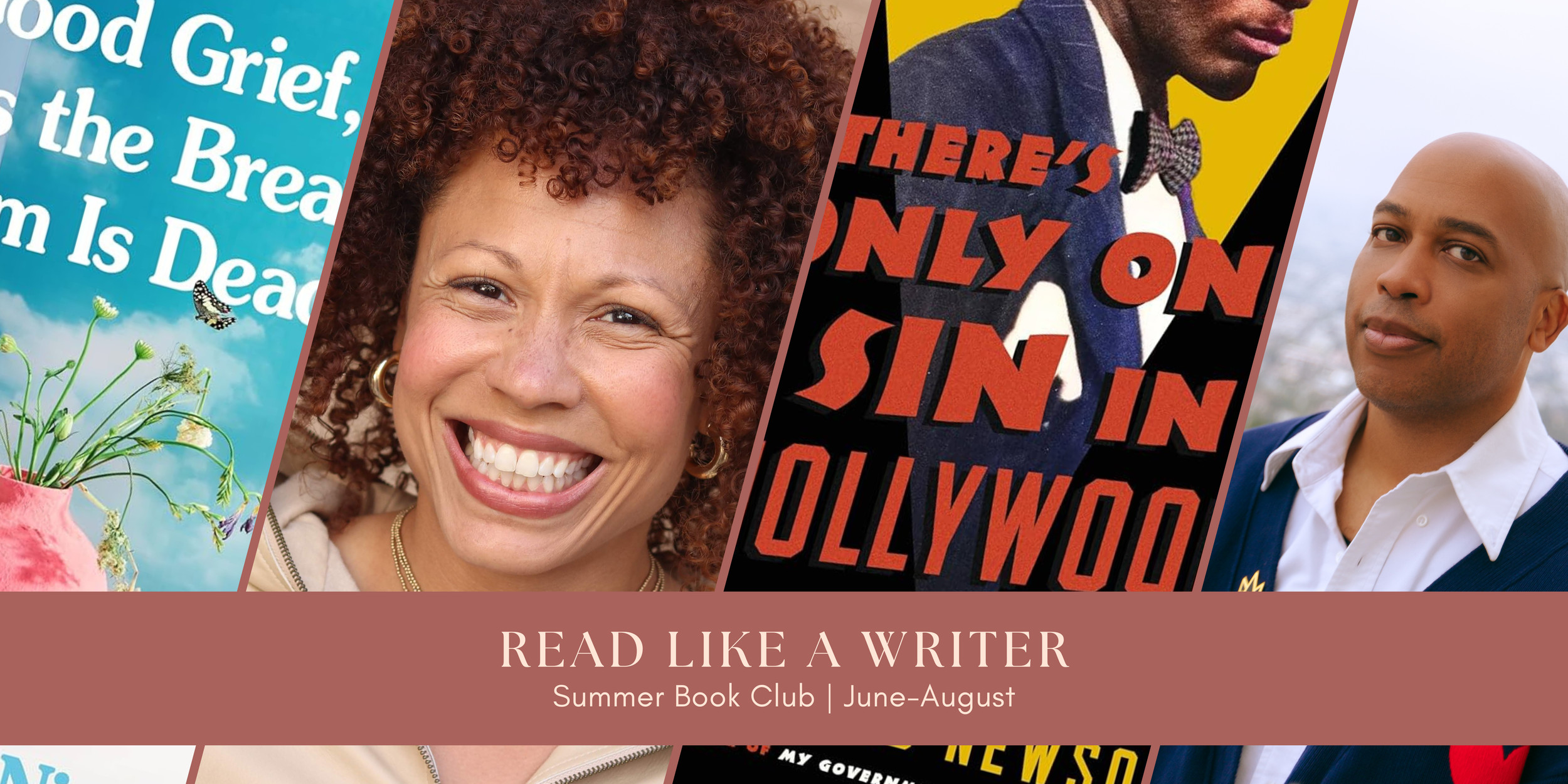
Read Like a Writer
Letter, Chapters 1–5
Hi Writers,
Jumping in this week, the first thing I noticed was that the book is broken into three acts. Whether that's a nod to Hollywood itself or to the fact that Rasheed is a TV writer, I found it interesting that he chose to structure it that way outright. Many novels are built in three parts whether they say so or not, but here, it's part of the text.
We open with a letter to Jim Kepner, though we don't yet know who he is within the story, a quick search told me Jim was a journalist, writer, and gay and lesbian rights activist, and knowing that only deepened my curiosity. Who is this person we're writing to, and why? The more I sit with it, the more the letter reads like a query, fitting, since the book is positioned as something of a tell-all. It also functions as a prologue, which I think is a clever way to execute that beat. We're still getting our preamble before the story begins; it's just dressed differently.
By the end of the letter, we already know Xavier is dead and Aaron soon will be. But we keep reading, because we want to know how. Toni Morrison talked about this often in her own work, she'd tell you what happened up front and trust the unfolding to hold you. When she opens with the line about the white girl being shot first, you're immediately asking: who is she? Who shot her? Why? That's the engine.
New writers often hold back because they're afraid of giving too much away too soon. That instinct isn't wrong, but the real skill is finding the balance between drawing a reader in immediately and still building suspense. Both have to happen, and earlier than most of us think.
The device of a character writing the story is an interesting choice here, and it echoes how Newson used footnotes in My Government Means to Kill Me positioning it as a nonfiction telling of the story within the novel. Footnotes could easily feel clunky in a novel, but I enjoyed them. This is what we mean when we talk about differentiating your work in the market, it's often these small structural choices that decide whether your book stands out to an agent or publisher.
This is historical fiction, so we're moving through real time, specifically around the Korean War, 1950–1953 and thereafter. Rasheed has a gift for making old stories feel new, and he blurs the line between what's real and what's invented so well that you may find yourself Googling as you read. I looked up nitrate film, Dream Factory, Skyline Motion Picture, and the concept of a Hollywood fixer, just to orient myself.
We first meet Aaron as a young man discovering his love of film while working at a local theater screening silent pictures. Rasheed gives us vignettes of backstory for both Xavier and Aaron, and he paints those early years with real precision. We know Aaron's upbringing was rough, as he recounts having to physically fight for his life against his father and brother. But I love what Newson does with this single line, after he receives his first assignment in the Navy: "There were nights I missed Ohio." Easy reading is hard writing, as Maya Angelou put it — and that line tells us everything about how hard the work was, reminding us of how simple, but telling, language can be.
Historical fiction can tempt a writer into trying to get every detail exactly right, but fiction gives you license to dream a little. Build the foundation, ground it in real events, and then let yourself play.
I also noticed we move back and forth in time, which is interesting given how much writing advice warns against flashbacks altogether. But this is a case of learning the rules well enough to know when to break them. If you execute it well, no one stops you, though this will be one of my questions for us when we gather on August 30th. We're moved between Aaron's time in the Navy during the war and the ballroom bathroom where he first meets Xavier, and somehow I never lose the thread. Both timelines stay intriguing, which is the real test. I think about the film The Photograph often in this context — how many of us were more invested in the mother's love story than the present-day one. That's the trap you want to avoid: readers skipping ahead to get back to the storyline they actually care about.
A friend of mine once described Rasheed's writing as alive, and I haven't found a better word for it since. His characters feel authentic, they stand fully in their decisions, good or bad, and their vulnerability pulls you in close enough to want them to be okay. Not every character needs that quality; sometimes you're after something else entirely. But it's consistently what I've loved across his first two novels.
He also has a gift for longing between two people. There's a moment on page 64 where Aaron nearly reaches for Xavier across a restaurant table, the two of them held back only by what they can't say aloud, until Aaron finally "said nothing until he stifled his pain." It's a small, devastating image of restraint.
I'm looking forward to digging further into this one, and to finding out what really happened to Xavier. The people need to know. And that's exactly what keeps you reading.
With love, and a dog-eared page,
Ashley